Borong Kurma: A Strategy for Bulk Date Buyers

Borong kurma, buying dates by the pack instead of by the kilo, comes down to how much you pay per kilogram, how fast you can sell or eat what you bought, and how well the fruit keeps in between. This guide works through those three questions with real pack prices, so a retailer or a family planning a kenduri can decide how far kurma borong makes sense for them.
If you are still deciding who to buy from, the earlier piece on Borong kurma sourcing in Seri Kembangan covers the supplier side. What follows is the strategy side.
Why buy kurma borong: the per-kilo arithmetic
The case for buying in bulk lives or dies on the per-kilogram price, so it is worth doing the sums yourself instead of trusting a "cheaper in bulk" line. The table below pairs a 1kg pack with a 5kg pack of the same variety and a similar grade label, using one Malaysian wholesaler's prices checked in November 2026. Grade names are copied exactly as they appear on the listings.
| Variety | 1kg pack | Price | 5kg pack | Price | RM per kg (5kg) |
|---|---|---|---|---|---|
| Ajwa | 1kg Ajwa AA 2026 | RM36 | Ajwa Premium AA 2026 [5kg] (out of stock) | RM145 | RM29.00 |
| Ajwa | 1kg Ajwa AAA VIP (Large) | RM44 | Ajwa Premium VIP AAA [5kg] | RM175 | RM35.00 |
| Safawi | 1kg Safawi AA (out of stock) | RM40 | Safawi Premium AA - 5kg | RM153 | RM30.60 |
| Safawi | 1kg Safawi A | RM35 | Safawi Premium A No.1 (Small) 2026 - 5kg | RM95 | RM19.00 |
| Mariami | 1kg Mariami AAA | RM40 | Mariami AAA VIP 2026 [5kg] | RM148 | RM29.60 |
In every one of those five pairs the 5kg pack came out cheaper per kilo. The gap ranges from RM7 a kilo on Ajwa AA to RM16 a kilo on Safawi A, although the Safawi A pair compares a plain "A" with an "A No.1 (Small)" label, so read it as a guide and not an exact like-for-like. On a 5kg order of Safawi AA, RM30.60 against RM40 is a saving of RM47 on the order.
Two of the packs in the table were out of stock on the day of checking. That matters. A per-kilo saving on a pack you cannot buy is only useful for planning the next order.
When a bigger order is not cheaper
Bulk does not always mean a lower price per kilo. Small consumer packs sold by the dozen are the clearest example. The Ajwa A Pouch Bag 2026, 24 pouches of 200g, was listed at RM221, which works out at RM46.04 a kilo, against RM31 for the plain 1kg Ajwa A 2026 pack. That pouch listing was out of stock when checked, but the gap is worth remembering whenever small packs are on offer.
Medjool shows the same thing between two multi-pack formats. Among the in-stock Medjool listings, Medjool Palestin Jumbo 2026 in 12 packs of 500g cost RM355 (RM59.17 a kilo), while the 8 packs of 900g version cost RM448 (RM62.22 a kilo). The single 900g Medjool Palestin Jumbo box was RM70, or RM77.78 a kilo. So the larger pack was not automatically the better buy, and the right choice depends on whether you are reselling in small units or serving the fruit yourself.
The practical habit is simple. Divide the price by the total weight every time, including for pouch and gift formats, and compare grades with the same label before you compare varieties.
Choosing varieties for a bulk order
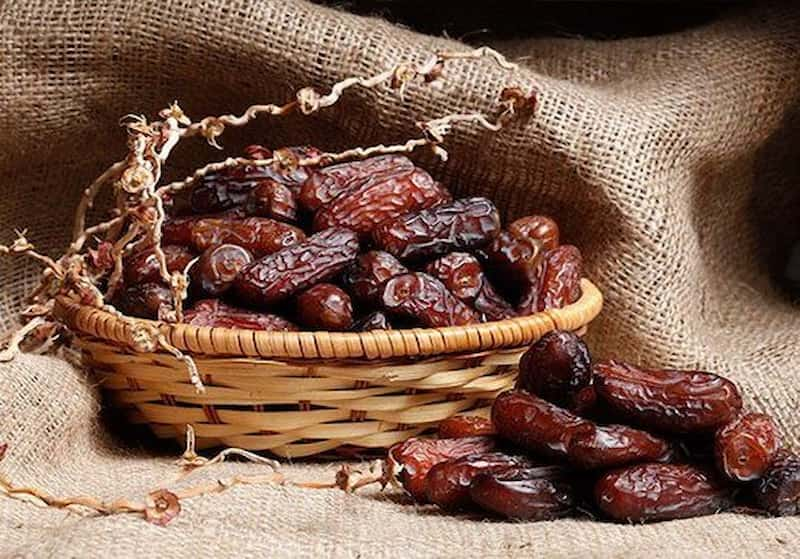
Every date sold in Malaysia is imported, so your choice of variety is also a choice of origin. A short reference for the varieties named in this guide:
- Ajwa comes from Madinah in Saudi Arabia. It is small, roundish and near-black, with finely wrinkled skin and a soft bite. Large and Jumbo on Ajwa listings are the seller's own size grades. There is more on pricing in the guide to buying Ajwa by the pack.
- Safawi is also from the Madinah region, longer than Ajwa, dark brown to black, soft and chewy.
- Mabroom, from the same region, is long and slender, reddish-brown, semi-dry and chewy.
- Medjool originated in Morocco. The listings checked here are Palestinian stock. It is a large, very soft date with a rich caramel taste.
- Deglet Noor comes from Tunisia and Algeria. It is golden, translucent and semi-dry, and in Malaysia it is the date sold on the stem as kurma tangkai.
- Mariami is from Iran. It is dark, semi-dry and chewy.
Grades such as A, AA, AAA and Jumbo are each importer's own size sorting and not an international standard. An AA from one supplier will not necessarily match an AA from another, which is another reason to compare per-kilo prices within one price list first.
Questions to ask a supplier before you pay
A good supplier is easier to judge by the answers you get than by the adjectives on their page. A few questions do most of the work.
Ask what is actually in stock today, not what appears on a price list. As the table above shows, a price list can include packs that are sold out.
Ask what the label on the pack will state. FAO's date palm handbook notes that in most importing countries the law demands that weight, country of origin, quality and date of expiry appear on the package. If a supplier cannot tell you the origin or the net weight of a pack, treat that as your answer.
Ask how the order will be confirmed, paid and delivered, and keep that in writing. The step-by-step walk-through of how a bulk order runs in Malaysia (in Malay) goes from choosing a variety to checking the pack that arrives. When the stock arrives, weigh it and check it before you sign anything off; the arrival checklist for net weight and damaged fruit lists what to look at.
Storing a bulk order once it arrives
How long a kurma borong order keeps depends on the ripeness stage of the fruit and on temperature. FAO's date palm handbook describes fruit harvested at the tamar stage as non-perishable, while fruit at the soft rutab stage is highly perishable and delicate. Mazafati, sold soft as rotab, needs refrigeration.
For long holding, the same handbook says the temperature commonly used to preserve dates of several varieties, Medjool included, is minus 18°C, which reduces water loss as well as sugar crystallisation and skin separation. It also gives storage figures from research in Tunisia: at higher humidity, dates needed 0°C and kept for six to eight months; at lower humidity they kept for more than a year; at the lowest humidity level they could be stored at 25°C for up to a year. For Deglet Noor on the branch, FAO advises 0 to 4°C during packing, storage and shipment, and warns that freezing darkens the fruit.

None of that tells you how long a particular pack will last in a shop in Kuala Lumpur. Read the expiry date on the label, keep soft and dry varieties apart, and open 5kg packs one at a time so the others stay unopened.
Timing an order around the year
Demand for dates in Malaysia peaks before and during Ramadan. Hari Raya, weddings (hantaran), kenduri and umrah gifts are other peaks. Gulf and Middle Eastern dates are mostly harvested from late summer to autumn, roughly August to November, and new-season stock reaches Malaysia some weeks later.
For a retailer, that means ordering well before the Ramadan rush rather than waiting for it, and checking stock status again a week before you need the fruit. Soft Mazafati is cold-stored and sold year-round, so it is not a reason to rush. On the day these prices were checked, though, the three rotab 12-pack listings of 600g on the list were all out of stock, so check before you plan around it.
Planning stock if you resell
Kurma borong only pays off if you can sell or use the fruit while it is still in good condition. A new seller can start with one or two varieties that customers already ask for by name, buy them in 5kg packs, and add another variety once the first is moving. Write down what sold in each week of Ramadan; next year's order will be better for it.
Keep the arithmetic in front of you too. If a 5kg pack of Safawi Premium A No.1 (Small) costs RM95, every kilo you repack costs you RM19 before bags, labels and your time.
Frequently asked questions
Is kurma borong always cheaper than buying 1kg packs?
Not always. In the five pairs in the table, the 5kg pack cost less per kilo. Pouch and gift formats can cost more per kilo than a plain 1kg pack, as the Ajwa pouch example shows.
What size of order should a first-time buyer start with?
One 5kg pack of one variety is a sensible test. It gives you the bulk per-kilo price without tying up money in stock you have not sold before.
Do grade names mean the same thing at every supplier?
No. A, AA, AAA and Jumbo are each importer's own size sorting, so compare grades within one supplier's list before comparing suppliers.
More about this site is on the About Us page and the contact page.